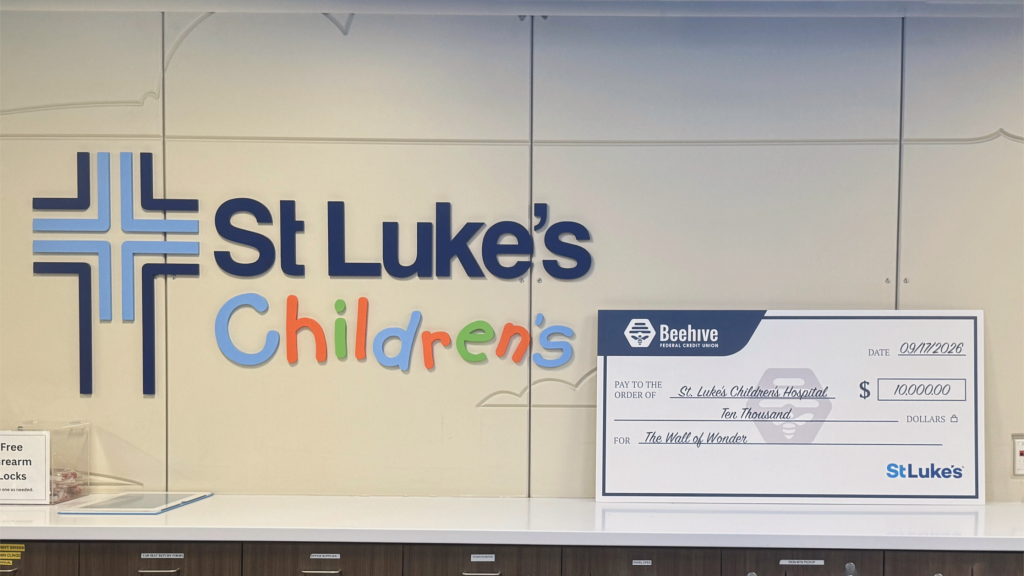

Beehive FCU donates $10,000 to St. Luke’s Children’s for new interactive space

Gone Phishing: How to Protect Yourself from AI Scams

Scams have been around for a long time. With AI, many of them now look and sound more convincing. At Beehive, we regularly see scams that pretend to be us or pressure you into sending money. The good news is that knowing what to look for makes a real difference. Here are the most common scams we’ve seen in 2026, and how you can protect yourself.
Scams You Might Encounter
You Have a Message
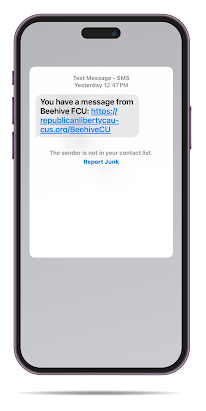
Some of our members have received a text similar to the one below, telling them that Beehive has sent them a message and including a link to a website. We will never send you an unsolicited text or a link to a website that isn’t ours.
Fraud Alert for Your Card
You may receive an email, text message, or call informing you there is a fraud alert for your card. It will ask if you attempted to use your card at a location and prompt you to answer. You can find an example of this type of fraud here.
We Need Your Username/Password/Verification Code
Many scammers will directly ask for your username, password, or verification code. A code may seem small, but it’s all scammers need to steal personal information, reset usernames or passwords, or access your account.
Just Moving Money Around
Some scammers ask to use your account to move money, calling it a test or a quick favor. They may also tell you to lie if we ask about those transactions. We will never ask you to lie about transactions or activity on your account, and anyone who does is a scammer.
Depositing a Check
Someone you don’t know will send you a fake check and explain they need you to send some of it back to cover taxes or fees, buy supplies for a job, or because they accidentally sent too much. When you deposit the check, it might seem real at first, but it will eventually bounce and the money will be gone.
What To Look Out For
No matter what type of scam it is, you can always look out for the same warning signs:
- Urgency, fear, and pressure: This is the biggest red flag for any kind of phishing scam. Scammers have learned that panic and fear makes people act without really thinking about it, and they can get away with a lot more.
- Suspicious contact: If you weren’t expecting an email or text message from the organization, chances are, it’s a scam. They can also spoof caller ID, making it appear like it’s coming from an organization or loved one.
- Unusual requests: Be cautious about wire transfers, gift cards, or payment apps because they are difficult to reverse. If you receive a check that you weren’t expecting, stop into any branch and ask us to double check whether it’s real or not before you deposit it.
What Beehive Will Never Ask You For
We will never ask you for personal information through an unsolicited call or text. Caller ID can appear to be Beehive. If you receive a call or message asking for your:
- Member number,
- Username/password,
- Card number,
- Social Security number,
- Date of birth, or
- Security/verification code,
Hang up or delete the text right away and contact us directly at (208) 656-1000.
What Should I Do If I Think It’s a Scam?
Pause
Before you act, take a second to pause. Look at where the request came from and what it’s asking. Were you expecting something? Is it an unusual request to send money to someone you don’t know or click a link or attachment?
Verify
Double check the email address or phone number you’re receiving the request from. If you don’t recognize it, or it uses small variations in the email address to make it look like a legitimate one, it may be a scam.
Contact
Your next step should be to contact the individual, business, or Beehive directly, with a phone number or email address you already trust. Let them know you have received a scam message claiming to be them.
Already clicked a link or shared information? Contact us immediately at (208) 656-1000. It happens, and the sooner we know, the sooner we can protect your accounts.
Still Have Questions?
- What scams are currently targeting Beehive members?
- Our most recent ones include “You have a message”, “Fraud alert for your card”, and “We need your username/password/verification code”.
- How can I tell if a call or text from Beehive is legitimate?
- Beehive will never call to ask for personal, account, or card information. This is information we already have as your financial institution. If you’re unsure that it is a Beehive employee, hang up and call us back directly at (208) 656-1000.
- What information will Beehive never ask me to provide?
- Over an unsolicited phone call or text, we will never ask for your:
- Member number,
- Username/password,
- Card number,
- Social Security number,
- Date of birth, or
- Security/verification code.
- Over an unsolicited phone call or text, we will never ask for your:
- What should I do if I gave information to a scammer?
- If you have already given information or money to a scammer, you should call us right away at (208) 656-1000. We can freeze your account and disable online banking to protect it from further fraud.
- Can scammers spoof Beehive’s phone number?
- Scammers can spoof caller ID so a call looks like it’s from us. If you get a suspicious call or text message, please hang up and call us directly at (208) 656-1000.
- How do I report suspected fraud to Beehive?
- If you receive a message you believe to be fraud, you can contact us directly at (208) 656-1000.